
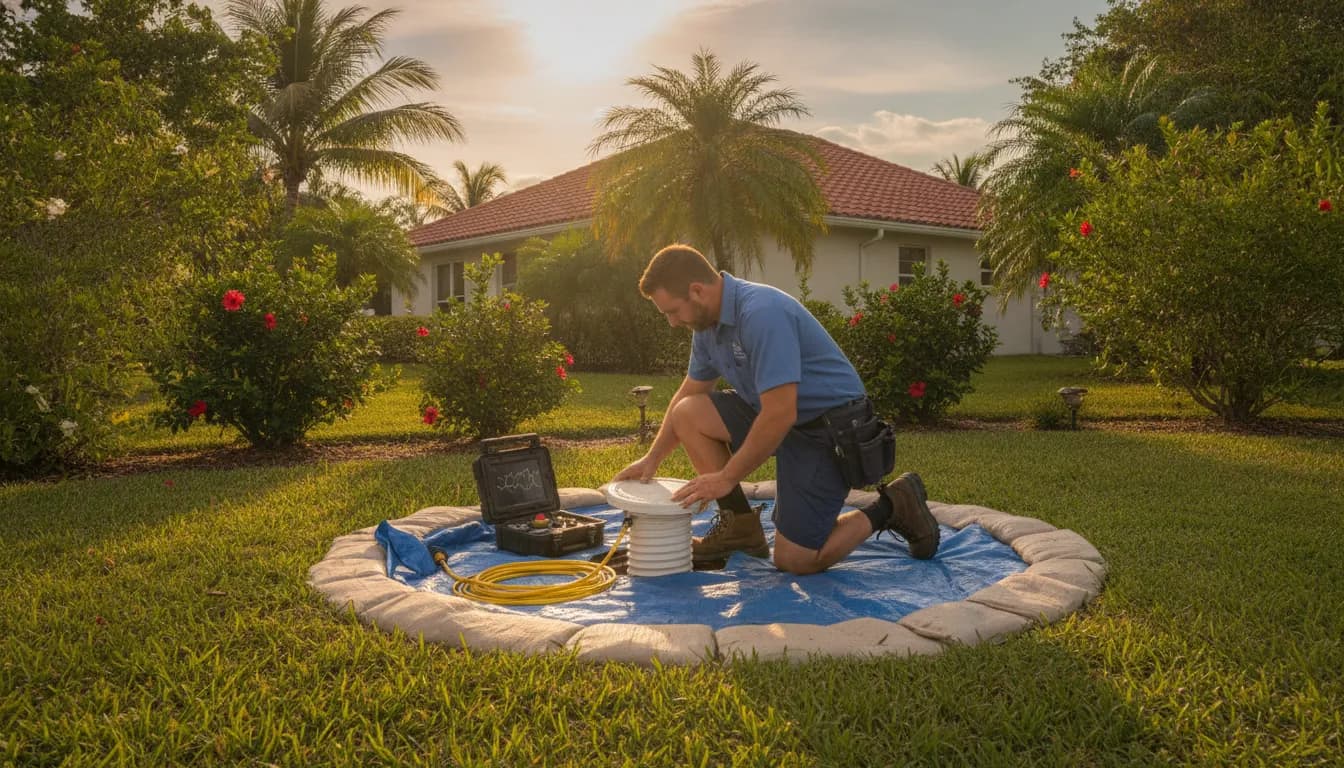
Recurring backups, slow drains, sewage odors, or wet spots in the yard can point to an underground sewer problem, but symptoms alone cannot show which repair is appropriate. A camera inspection is the practical starting point for Space Coast homeowners because it can help distinguish a stubborn clog from pipe damage that may require repair or replacement. Learn more about what to expect from a sewer camera inspection.
Request a sewer line evaluation from Space Coast Cooling & Plumbing
Trenchless sewer line repair restores or replaces a damaged pipe through existing access points or smaller insertion pits instead of excavating the entire pipeline. Whether it is an option depends on the pipe's condition, damage, alignment, access, and surrounding property. Severe collapses, major deformation, or other site conditions may make conventional excavation the better recommendation.
Understanding the difference between these approaches makes the inspection findings easier to interpret. The first step is defining what trenchless work actually changes, and what it does not.
What Does Trenchless Sewer Line Repair Mean?
Trenchless sewer line repair is a group of rehabilitation or replacement methods that address an underground pipe without opening a continuous trench across the full length of the line. In general, the existing sewer pipe serves as the host for a new pipe or liner, according to the U.S. Environmental Protection Agency. The exact approach depends on what a camera inspection finds, the pipe's condition, available access, and the layout of the property.
How trenchless work differs from excavation
With conventional dig-and-replace work, the crew excavates along the existing pipeline so the damaged section can be removed and replaced. The EPA describes this as digging along the entire length of the existing line when a replacement sewer is constructed. That approach can be appropriate when the pipe has collapsed, access is poor, or other site conditions make rehabilitation unsuitable.
Trenchless methods generally use existing openings, such as manholes, or smaller insertion pits instead of excavating over the entire pipe. That can reduce the amount of soil, landscaping, paving, or other surface features disturbed during the work. The EPA notes that trenchless rehabilitation may require less restoration and cause less disturbance than traditional dig-and-replace work. It does not mean that every project avoids digging, cleanup, or surface repairs.
What the term includes
Trenchless describes the access and rehabilitation approach, not one single product or repair. EPA materials identify several trenchless methods, including pipe bursting, sliplining, cured-in-place pipe, and modified cross-section liners. For example, pipe bursting uses a tool to open and force the old pipe outward while pulling a new pipeline into the space created behind it. Cured-in-place lining uses a resin-saturated tube inserted through an existing access point and cured inside the old line. These examples explain the general concepts, but they do not establish that either method is suitable for a particular home.
A sewer camera inspection is an important part of separating a repair decision from a simple clog-removal need. Repeated backups, slow drains, odors, or wet areas can point to different problems, and symptoms alone cannot confirm trenchless eligibility. A professional evaluation should identify the damaged section, assess access and alignment, and compare trenchless options with conventional excavation before work is selected. For a broader overview, review these sewer repair methods.
When Is Trenchless Sewer Line Repair Considered?
Homeowners usually begin asking about trenchless options after a sewer problem keeps returning or becomes difficult to explain. Repeated clogs, slow drains, sewage backups, persistent sewer odors, or wet areas in the yard can all justify a closer evaluation. These signs may point to a damaged underground line, but they do not prove that trenchless sewer line repair is appropriate. A blockage, connection issue, or separate plumbing problem can create similar symptoms.
Symptoms that warrant a sewer line evaluation
Pay attention to patterns rather than one isolated drain event. A single clog may respond to routine drain cleaning. Problems that recur after snaking or return in several fixtures deserve more investigation. Backups involving toilets, showers, or floor drains can indicate that wastewater is meeting resistance farther along the main sewer line. Unusual odors around cleanouts, bathrooms, or the yard may also signal a drainage problem, especially when they occur with slow fixtures or standing water.
Changes outside the home can provide another clue. Soft, unusually wet, or sunken areas along the route of a sewer line may be associated with leakage, settling, or a damaged pipe. Cracks, settling, and tree-root intrusion are recognized causes of sewer-line deterioration over time. Roots can enter through damaged pipe walls, creating both blockages and additional damage. If roots are suspected, review this guide to tree root sewer damage for additional background.
Why symptoms cannot determine trenchless eligibility
The same symptom can have different causes, and the repair method depends on what is actually happening underground. A sewer camera inspection provides video information about the line, helping distinguish a removable clog from a repair or replacement need. The evaluation may look for cracks, root intrusion, separated joints, obstructions, collapse, changes in grade, or other conditions that affect the repair plan.
Access and site conditions matter as well. Some trenchless work requires a usable cleanout or another way to reach the affected section. The pipe's condition, alignment, damage source, and nearby connections can influence whether lining, pipe bursting, another approach, or conventional excavation is recommended. Severe damage, a collapse, or a low section that holds wastewater may not be suitable for a trenchless method.
For Space Coast and Brevard County properties, the practical next step is an inspection-led discussion of the findings. Ask what the camera shows, which portion of the line is affected, and why a particular repair method is being proposed. That approach keeps the decision tied to the condition of the pipe and the property, rather than assuming a symptom automatically qualifies the job for trenchless repair.
How Does a Sewer Camera Inspection Shape the Repair Plan?
A sewer camera inspection turns a suspected underground problem into something a plumber can evaluate directly. Space Coast Cooling & Plumbing offers this video diagnostic service to assess sewer pipes below the property. Instead of choosing a repair method from symptoms alone, the technician can review the pipe's interior. Identify the problem area, and discuss options that fit the actual condition of the line.
- Establish access to the sewer line. The inspection begins by identifying a usable entry point, such as a cleanout or another appropriate access location. Access affects how much of the line can be viewed and whether equipment can reach the area where the problem is suspected. If access is limited, that limitation becomes part of the repair discussion.
- Run and review the camera. A small camera travels through the sewer line while its video feed shows the pipe's interior. The review looks for conditions such as buildup, roots, cracks, separated sections, settling, or a collapse. The goal is not simply to find a blockage. It is to understand the pipe condition around it and determine whether the issue appears localized or extends farther along the line.
- Locate the damage. When the camera identifies a defect, the technician needs to establish where it is in relation to the cleanout, structure, property, and other connections. Accurate locating helps separate a problem inside the building from one in the underground service line. It also helps clarify which portions of the property may be affected if access or excavation becomes necessary.
- Separate a clog from a pipe failure. A recurring backup may come from material that can be removed with drain cleaning, snaking, augering, hydro jetting, or rooter service. A damaged pipe requires a different conversation. Camera information helps show whether the line needs cleaning, a targeted repair, or replacement. Roots may contribute to both clogs and pipe damage, so removing the visible obstruction does not automatically resolve the underlying condition.
- Match the method to the findings. The repair recommendation depends on the damage, its source, pipe alignment, access, connections, and overall site conditions. Trenchless sewer line repair may be considered when the existing line and property conditions support it, but it is not automatically suitable. Severe collapse, major distortion, or other access and condition problems may lead to conventional excavation instead. A clear review should explain the recommended method, what it addresses, and any limitations before work begins.
For a plain-language overview of the diagnostic step, see this sewer camera inspection guide. The inspection does not commit you to a particular repair. It gives you a factual starting point for comparing the available paths.
What Are the Main Trenchless Repair Methods?
Trenchless sewer line repair is a category of methods, not one single procedure. The right approach depends on the pipe's condition, its alignment, available access, and what the inspection shows. Two commonly discussed approaches are pipe lining and pipe bursting. Both can reduce the need to excavate the full length of a sewer line, but they solve different problems.
Pipe Lining Creates a New Pipe Inside the Existing One
Pipe lining rehabilitates the existing line by using it as a host for a new pipe or liner. The process generally begins with cleaning the old sewer so the lining material can be placed against the pipe walls. One form, called cured-in-place pipe, uses a resin-saturated felt tube inserted through existing manholes. In the cited municipal process, hot water or steam cures the resin and forms the liner in place. The exact materials and process used on a private property depend on the contractor's evaluation and the pipe's condition.
Lining may be considered when the existing pipe remains suitable as a pathway for the liner and the damage can be rehabilitated from within. It is not a promise that every cracked, shifted, or blocked line can be lined. A camera inspection and site evaluation are needed before anyone can responsibly recommend it.
Pipe Bursting Replaces the Existing Pipe Along Its Path
Pipe bursting takes a different approach. A bursting tool opens the existing pipe and forces it outward. As the tool moves through the line, it can pull a new pipeline behind it into the space created by the old pipe. EPA materials identify pipe bursting as a trenchless rehabilitation method and note that it can install a similarly sized or larger pipe, subject to site conditions.
Because bursting replaces the old pipe rather than placing a liner inside it, it may be considered when the existing line is not a good host for lining. Access, surrounding structures, soil conditions, utility conflicts, and connections still matter. Conventional excavation may be recommended when those conditions make a trenchless option unsuitable.
| Method | How it works | What determines suitability |
|---|---|---|
| Pipe lining | A liner is installed within the existing pipe and cured to form a new interior surface. | The condition, shape, cleanliness, and access to the existing line. |
| Pipe bursting | A bursting tool opens the old pipe while pulling a new pipe into the created path. | Pipe alignment, access, surrounding conditions, and space for the replacement pipe. |
EPA identifies other trenchless rehabilitation approaches as well, including sliplining and modified cross-section liners. These examples explain the range of available concepts, but they should not be treated as a recommendation for a particular Space Coast property. A professional sewer camera inspection is the starting point for separating a temporary blockage from a repair or replacement need and for deciding whether trenchless or traditional work is appropriate.
Sources: U.S. EPA trenchless sewer rehabilitation overview, U.S. EPA pipe bursting fact sheet, and City of Saint Paul sewer pipe lining process.
What Happens During a Trenchless Sewer Repair Project?
Trenchless sewer line repair is an inspection-led process, not a single guaranteed procedure. The exact work depends on the pipe's condition, available access, the location of the damage, and the property around the line. A typical project may include the following stages.
Preparing the Line and Access Points
- Inspect and plan the work. A sewer camera helps identify the damaged section, determine whether the problem is a clog or a pipe defect, and assess whether trenchless work is appropriate. The technician may also evaluate cleanouts, manholes, connection points, pipe alignment, and the surrounding property. If the line has severe collapse, a belly, or another condition that prevents the selected method from working, conventional excavation may be recommended instead.
- Clear the pipe and prepare access. The existing line is generally cleaned before a lining process. Depending on the findings, cleaning may involve equipment such as a drain cable or hydro jetting. Roots, buildup, and other obstructions need to be addressed so the repair material or replacement pipe can move through the intended section. Access may come through an existing opening or through one or more smaller insertion pits. Trenchless does not necessarily mean that no digging is required.
Installing the Repair
- Complete the selected repair. With pipe lining, a resin-saturated tube can be inserted through an existing access point and cured inside the old pipe. One municipal lining process describes curing the resin with hot water or steam, but equipment and procedures can vary by project. With pipe bursting, a bursting tool opens the existing pipe outward while pulling a new pipeline into the space it creates. The method, materials, and pipe size must be selected for the actual site conditions.
Checking Connections and the Finished Line
- Restore service connections and test the line. Lining can cover branch connections, so those openings may need to be located and reopened. A cited municipal process uses a robotic cutter to restore connections to private sewer services. The repaired line should then be checked for flow, alignment, and remaining issues. Testing and follow-up camera viewing can help confirm what was addressed, although the exact checks depend on the scope of work.
- Restore the access areas. After testing, the access points and any disturbed portions of the property are addressed. The amount and type of restoration depend on whether access used existing openings, small pits, hardscape, landscaping, or other site features. Ask what restoration is included in the written scope rather than assuming every surface will be returned in the same manner.
For homeowners in Brevard County, the most useful first step is a documented evaluation. It gives you a clearer basis for comparing trenchless and traditional sewer repair options without committing to a method before the pipe and property have been assessed.
What Are the Limitations of Trenchless Sewer Repair?
Trenchless sewer line repair can reduce the need to excavate the full length of a damaged line, but it is not a universal solution. The condition of the existing pipe, the location of the damage, available access, and the surrounding property all affect whether a trenchless method is appropriate. A camera inspection and site evaluation should guide that decision rather than symptoms alone.
Pipe condition can rule out trenchless work
Many trenchless methods depend on the existing sewer path being usable as a guide or host. A line with cracks, root intrusion, or isolated damage may still be a candidate, depending on the findings. However, severe deterioration, a complete collapse, or a pronounced low spot, sometimes called a belly, can make lining or bursting unsuitable. A damaged section may also be too misshapen or unstable for the new material to move through correctly.
Blockages and buildup matter as well. The line may need to be cleaned before a lining process, and an obstruction that cannot be cleared can prevent the work from proceeding. Connections from branch lines may also require attention. After lining, those connections may need to be located and reopened, so their position and condition are part of the repair plan.
Access, alignment, and property layout affect the plan
Trenchless does not mean that no digging is required. Some methods need a usable cleanout, manhole, or other access point. Others may require one or more insertion or receiving pits. If access is blocked, poorly positioned, or absent, conventional excavation may be the more practical option.
Alignment can create another limitation. A sharp change in direction, an unusual pipe configuration, or multiple connected lines may restrict the equipment or prevent a continuous repair. Private utility lines, foundations, driveways, patios, landscaping, narrow side yards, and other site constraints can also influence where equipment and access points can be placed. These conditions do not automatically determine the method, but they should be evaluated before work begins.
When conventional excavation may be recommended
Traditional excavation may be recommended when the pipe has collapsed, the damaged section cannot support the selected trenchless process. Connections or obstructions cannot be addressed through available access, or the line's alignment makes trenchless installation impractical. Excavation can also provide direct access when a specific section must be removed and replaced.
That recommendation is not a failure of diagnosis. It means the repair plan is being matched to the actual underground conditions. Reviewing the available sewer repair methods can help you understand why inspection findings, access, and property conditions matter before choosing between trenchless work and excavation.
How Should Space Coast Homeowners Choose the Next Step?
Start with the facts you can observe, then let an inspection guide the repair decision. Note when the problem began, which fixtures are affected, whether drains are slow or backing up, and whether you have noticed odors, wet spots, or recurring clogs. These details can help a plumber understand the pattern, but symptoms alone cannot confirm that a sewer line needs repair or show whether trenchless work is suitable.
Document the symptoms and protect the home
Keep a simple record of backups, drain-cleaning attempts, and changes in the problem. If sewage is backing up into the home, limit contact with the wastewater. Keep people and pets away from the affected area, and avoid using plumbing fixtures that may worsen the overflow. Space Coast Cooling & Plumbing handles sewage backup emergencies, so homeowners with an active or threatening backup can review the guidance for emergency sewer line repair and request help.
Request a camera evaluation before choosing a method
A sewer camera inspection provides video information about the underground line. It can help distinguish a removable blockage from conditions that may require repair or replacement. Ask for the location and type of damage, whether the pipe is open and structurally suitable for a trenchless approach. And whether the inspection identified roots, cracks, settling, a collapse, or another obstruction. Access points and site conditions also matter. The goal is not to arrive with a preferred method, but to make a decision based on what the camera and site evaluation show.
Compare the recommendation, scope, and restoration plan
If trenchless sewer line repair is being considered, ask which technique is recommended and why. Request a clear explanation of the work area, access requirements, connections that may need attention, testing, and the restoration included in the scope. Also ask what conditions would make conventional excavation the better option. A responsible recommendation should separate inspection findings from the repair plan and should explain costs based on the actual scope rather than promise a universal price or outcome.
Space Coast Cooling & Plumbing offers sewer camera inspection along with both trenchless and traditional sewer line repair for homeowners across Brevard County. Including Cocoa, Melbourne, Palm Bay, Titusville, and surrounding Space Coast communities. For the next step, review the sewer line repair service information and request an evaluation.
Request a sewer line evaluation from Space Coast Cooling & Plumbing
Frequently Asked Questions
How much does trenchless sewer line repair cost?
There is no responsible one-size-fits-all price. The cost depends on the pipe's location, length, diameter, damage, access, and selected method. A camera inspection and site evaluation can separate a blockage from a repair or replacement need, then support a clear estimate for the recommended work.
Is trenchless sewer repair always the most affordable option?
Not necessarily. Trenchless work may reduce excavation and restoration, but it is not automatically the lowest-cost choice for every property or every type of damage. Compare the inspection findings, repair scope, access requirements, and restoration involved in trenchless and conventional excavation before choosing an approach.
How do I know if my sewer line qualifies for trenchless repair?
You cannot confirm eligibility from symptoms alone. A sewer camera inspection helps show the pipe's condition, alignment, access, and damage. Severe deterioration, a collapse, a belly, or limited access may lead to a recommendation for conventional excavation instead.
How long does a trenchless sewer repair last?
No contractor should guarantee a specific lifespan without knowing the material, installation quality, pipe conditions, and site factors. Ask which method and material are proposed, what the inspection found, and what written warranty terms apply. Those details are more useful than relying on a general lifespan claim.
Does trenchless repair avoid all digging?
No. Trenchless methods can use existing openings or smaller insertion pits instead of excavating the full pipe length, but access work may still be necessary. Site conditions, connections, and the selected method determine how much excavation and restoration the project requires.
Ready to Plan Your Sewer Line Next Step?
An inspection can help clarify the condition of your sewer line and which repair options may fit your property's needs. Space Coast Cooling & Plumbing can review the findings with you without assuming a specific method in advance. Contact us to request a sewer line evaluation or schedule plumbing service.