
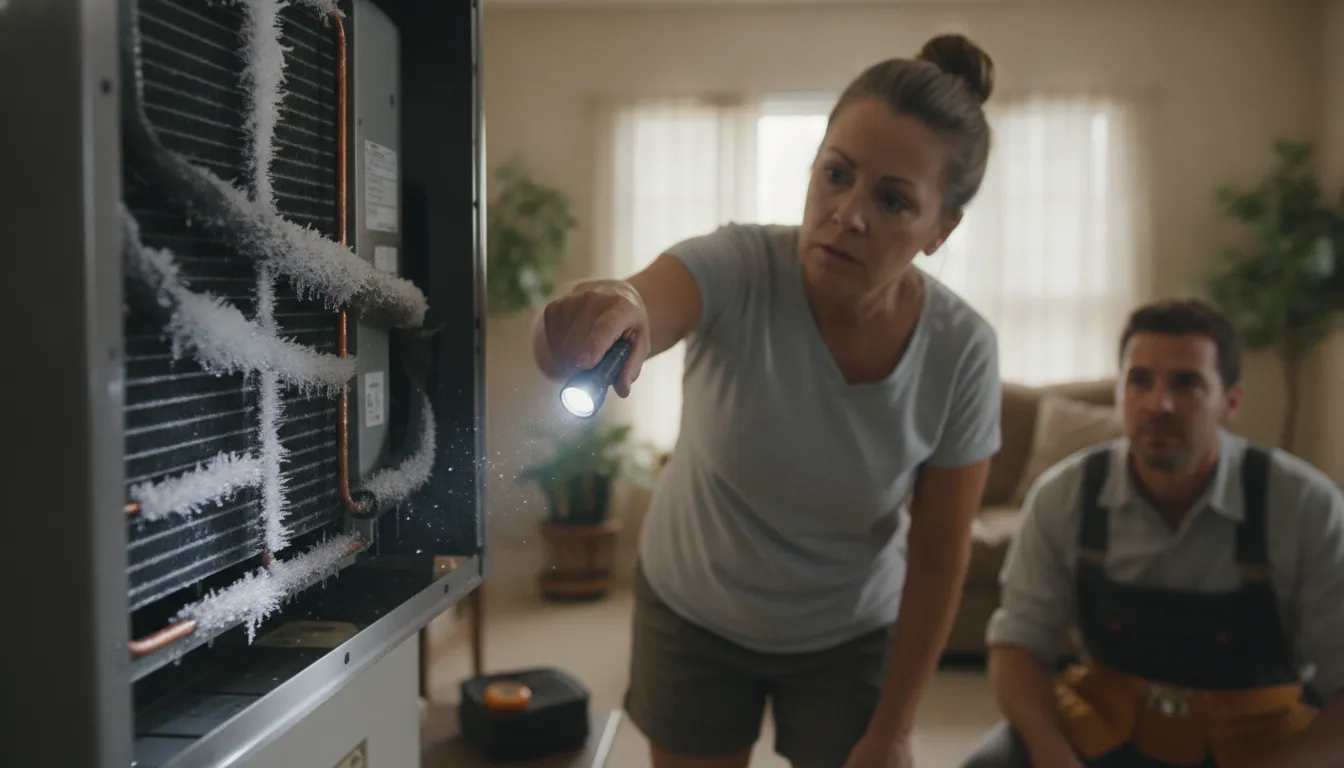
Ice on an air conditioner can feel impossible in Florida's heat, but it usually signals an airflow or cooling problem that should not be ignored. If your AC is running constantly, cooling unevenly, or leaving water around the indoor unit, schedule a professional assessment before the thawing ice causes additional damage.
Schedule frozen AC service with Space Coast Cooling & Plumbing
If you are wondering why is my ac freezing up, the usual reasons are restricted airflow from a dirty filter or blocked vent, a dirty indoor coil, or low refrigerant. When too little warm air moves across the coil, its temperature can fall below 32 degrees and moisture in the air freezes onto it. Florida's humidity and long cooling cycles can make the problem more noticeable.
Turn the system off at the thermostat and let all visible ice melt before restarting it. Then, look at the common causes, the warning signs that require professional help, and the safest way to restore reliable cooling.
Why Is My AC Freezing Up in Florida?
Seeing ice on an air conditioner in Florida seems backward. Outside temperatures may be in the 90s, yet the indoor unit can develop frost or a solid layer of ice. If you are wondering, "why is my ac freezing up," the short answer is that the indoor coil has become colder than it should be while warm, humid air is still moving across it.
During normal cooling, the evaporator coil absorbs heat from the air inside your home. That air also contains moisture, which normally condenses on the coil and drains away. When the coil temperature falls below about 32 degrees Fahrenheit, the moisture freezes instead. The first signs may be a thin coating of frost, weak airflow from the vents, an AC that runs constantly, or water around the indoor unit after the ice begins to melt.
Why Florida humidity matters
Florida's long cooling season gives an air conditioner many hours of operation, and the warm, humid air adds a steady supply of moisture for the coil to collect. A system can freeze even while the rest of the house feels hot. In fact, the combination of high humidity and extended run times can make an existing airflow or refrigerant problem more noticeable.
Restricted airflow is one common pathway. A dirty filter, blocked return vent, closed register, or heavily dirty coil can reduce the warm air reaching the coil. With less heat moving across it, the coil temperature can drop rapidly and ice can build. Low refrigerant is another possible cause because it can make the coil run too cold. These causes can produce similar homeowner symptoms, so ice alone does not identify the exact repair.
Turn the system off at the thermostat when you notice ice rather than continuing to run it. Letting the ice thaw helps protect the equipment, but recurring freezing means the underlying problem still needs attention. The next sections separate the airflow and refrigerant causes so you can understand what to check safely and when professional service is appropriate.
| Restricted airflow | Low refrigerant | |
|---|---|---|
| What happens | Warm air cannot reach the coil, so it runs too cold | Abnormal pressure makes the coil drop below freezing |
| Common signs | Dirty filter, blocked vent, closed register, weak airflow | Running constantly, warm air from vents, ice on the line |
| Owner checklist | Replace filter, clear vents, check registers | Refrigerant is a sealed system; no homeowner Do-It-Yourself fix |
| When to call a pro | Ice returns after a clean filter and clear vents | Any suspected leak or low charge needs licensed diagnosis |
Restricted Airflow: Dirty Filters, Blocked Vents, and Closed Registers
When your AC runs constantly but the rooms still feel warm, restricted airflow may be allowing ice to build on the indoor coil. A clogged filter, blocked return vent, closed supply register, or dirty evaporator coil can reduce the amount of warm air moving across the coil. With less heat reaching it, the coil can become cold enough to freeze. This is one of the most common explanations for ice on the indoor unit, reduced cooling, or water around the system after the ice melts.
Start with the air filter
Check the filter before changing thermostat settings or restarting the system. A visibly gray, dusty, or clogged filter can make the AC work harder while delivering less cool air through the home. Filter replacement is generally recommended every 30 to 90 days, depending on the filter, how hard the system runs, pets, and other conditions. Homes with shedding pets or frequent construction dust may need more frequent changes. Regular replacement helps prevent the airflow restriction associated with frozen coils. Trane identifies dirty filters as a common cause of frozen evaporator coils.
Check vents and return registers
Walk through the house and make sure supply vents are open and not covered by furniture, rugs, curtains, or storage boxes. Return registers also need clear space so the system can draw in enough air. A blocked return restricts airflow through the indoor unit, while several closed supply registers can upset the system's air balance. If one room feels stuffy, do not assume closing vents in other rooms will solve the problem. The restriction may be increasing strain throughout the system.
When the coil itself is dirty
Dust and buildup on the evaporator coil can act like insulation. That reduces heat transfer, so the coil may stay too cold even when the filter and visible vents look clean. Coil cleaning usually requires access to the indoor equipment and should be handled carefully to avoid damaging fins, wiring, or nearby components.
Turn the AC off if you see ice, and let it thaw completely before operating it again. If the ice returns after a clean filter and clear vents, the system may have a deeper airflow problem or another fault. A professional AC frozen coil repair visit can identify the restriction before continued operation damages the equipment or sends meltwater into the home.
Low Refrigerant and How It Causes Ice Buildup
If your AC is blowing warmer air while ice forms on the indoor unit or refrigerant line, a low refrigerant charge may be part of the problem. Refrigerant absorbs heat from indoor air as it moves through the evaporator coil. When the charge is too low, the cooling cycle can operate at an abnormal pressure, allowing the coil temperature to fall below freezing. Moisture from the warm air then freezes on the coil instead of draining away.
The ice may start as a thin layer, but it can spread across the coil and restrict airflow even further. As less warm air moves across the coil, the system has fewer opportunities to absorb heat. You may notice the AC running constantly, weak airflow from the vents, or a home that feels humid despite long cooling cycles. Once the ice melts, water around the indoor unit can also create a risk of damage. For more symptom guidance, review this AC not cooling guide.
Why low refrigerant is different from normal use
Residential air conditioners are designed as sealed systems. Refrigerant should not simply disappear during ordinary operation. A low charge often indicates a leak, an installation issue, or another problem that needs to be found and corrected. Adding refrigerant without locating the cause may provide temporary relief while the system continues to freeze or lose cooling performance.
Many newer systems use R-410A. The U.S. Environmental Protection Agency explains that replacement refrigerants such as R-410A do not deplete the ozone layer, but they can still contribute to climate change and must be handled responsibly to avoid releases into the atmosphere. Read the EPA guidance on purchasing and repairing home air conditioners for more information.
Why this is not a DIY repair
Do not try to release, transfer, or recharge refrigerant yourself. Refrigerant work requires specialized equipment, leak testing, and responsible recovery practices. A licensed HVAC professional can confirm whether the charge is actually low, inspect for the source of the leak, and verify that airflow and operating pressures are safe. If you see ice, turn the system off and let it thaw rather than repeatedly restarting it. Once thawed, arrange professional service before continued operation causes more damage.
What to Do When You See Ice on Your AC
Ice on an air conditioner is a warning sign, not proof that the system is cooling exceptionally well. A frozen coil can reduce cooling and leave water around the indoor unit after the ice melts. Taking a few careful steps can limit damage while you determine whether a simple airflow problem or a deeper repair is involved.
Turn the system off at the thermostat
Set the thermostat to the off position as soon as you see ice. Do not keep lowering the temperature or let the system run in an attempt to force colder air through the home. The guidance from Trane recommends turning off a frozen AC immediately so the coil can thaw and the compressor is not exposed to avoidable stress. If the indoor unit is leaking, keep people away from standing water and protect nearby flooring or belongings.
Let the ice thaw completely
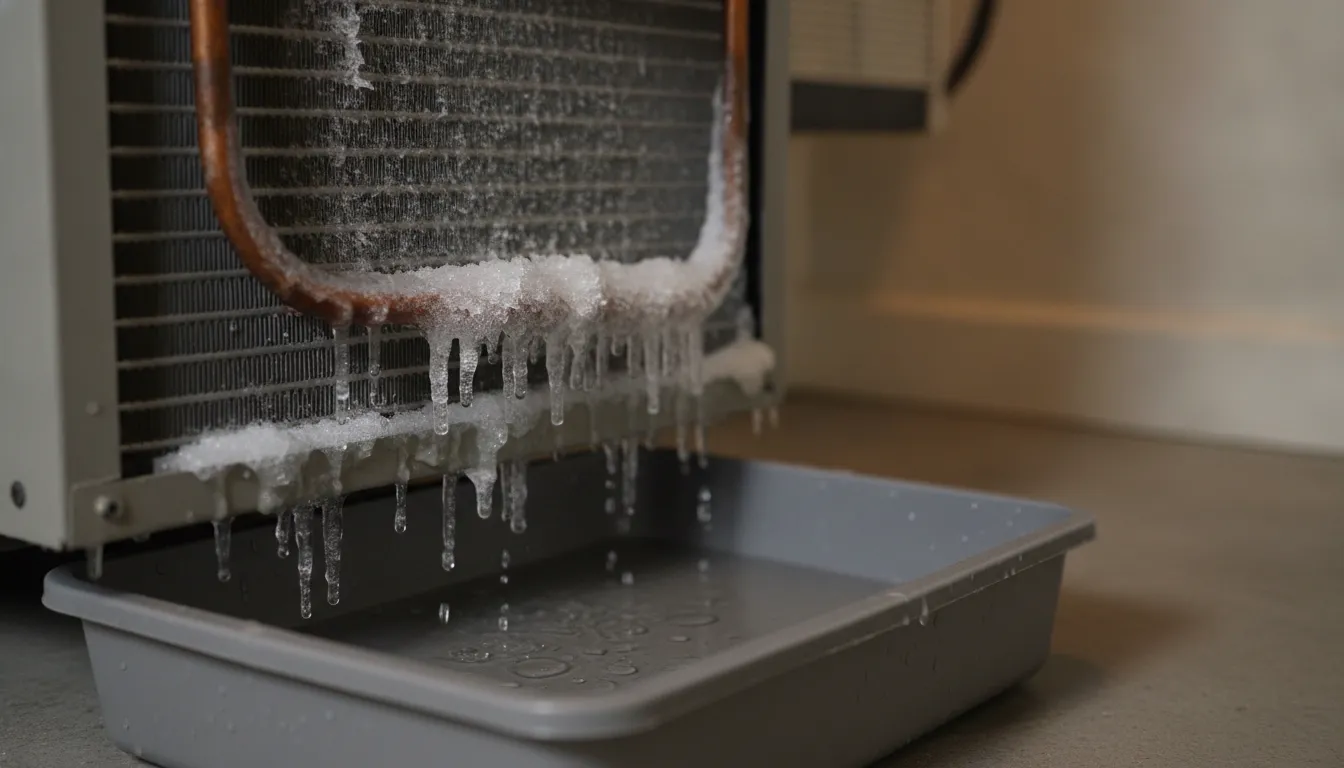
Leave the system off until all visible ice has melted. Thawing may take several hours, depending on how much ice has formed and how warm the surrounding space is. Do not chip at the ice with a tool, pour hot water over the unit, or restart the AC while any ice remains. Melting ice can become water around the indoor unit, so check the area periodically and use towels or a shallow container where appropriate.
Check and replace the air filter
Once the ice is gone, inspect the filter. A visibly dirty filter can restrict airflow enough to contribute to freezing. Replace it with the correct size and orientation for your system. Filters commonly need replacement every 30 to 90 days, depending on system use, pets, filter quality, and household conditions. If the filter looks clean but airflow has been weak, do not assume the problem is resolved.
Clear blocked vents and registers
Walk through the home and make sure supply registers and return vents are open and unobstructed. Move furniture, rugs, curtains, or storage items that may block them. Restricted airflow can make the system work harder and encourage another freeze. If the AC is still not cooling normally after thawing, arrange an inspection rather than repeatedly restarting it.
Call a professional if the ice returns
Recurring ice usually means the underlying issue remains. Possible causes include a persistent airflow restriction, a dirty coil, blower trouble, or low refrigerant. Refrigerant diagnosis and handling require professional equipment and training. Stop the system again and contact a qualified HVAC technician if ice returns, cooling remains weak, water continues leaking, or the unit makes unusual sounds. Prompt service can identify the cause before the frozen coil leads to additional compressor or water damage.
Following these steps helps protect the equipment, but it does not replace a diagnosis when freezing repeats. Document where you saw the ice, whether airflow felt weak, and whether water appeared indoors. Those details can help the technician narrow down the problem quickly.
How Long Does a Frozen AC Take to Thaw?
A lightly frozen AC may thaw in a few hours, while a heavily iced indoor coil can take up to 24 hours. The exact timing depends on how much ice has built up, the temperature around the indoor unit, and how freely warm air can move through the system. Do not restart cooling just because the visible ice is gone. Ice may remain inside the coil cabinet, and the system needs a complete thaw before cooling resumes.
Turn off cooling and let the ice melt naturally
Set the thermostat to Off as soon as you notice ice, weak airflow, or water around the indoor unit. Never chip at the ice with a tool, pour hot water over the coil, or try to force it loose. Those actions can damage the coil, wiring, or surrounding components. Place towels or a shallow container near safe areas where meltwater may collect, but do not open panels or reach into the equipment.
If your thermostat has a fan-only setting, switch the fan to On after cooling is off. Moving room-temperature air across the coil can help speed the thaw. Stop if water begins pooling, the indoor area becomes unsafe, or the fan does not operate normally. A frozen coil can leave behind substantial water as it melts, and a leaking indoor unit is a recognized symptom of a frozen system (Trane).
Know when waiting is no longer the best option
After the system has fully thawed, check that the filter is clean and that supply and return vents are open. Restart cooling only once the coil and cabinet are dry. If the AC freezes again, does not cool, or cannot run safely, the cause may be restricted airflow, a dirty coil, or low refrigerant rather than the ice itself. Review this AC repair guide for Florida for related warning signs, or contact Space Coast Cooling & Plumbing for 24/7 emergency response in Brevard County.
Can You Run a Frozen AC? What You Risk by Waiting
If you see ice on the indoor AC unit or notice the system running constantly without cooling the home, turn it off at the thermostat. Running a frozen system does not make the ice disappear. Continuous operation, especially when airflow is restricted or refrigerant is low, can increase ice formation on the evaporator coil. Trane explains that shutting the system down immediately allows it to thaw and helps prevent potential compressor damage.
Compressor strain and possible damage
The compressor is one of the most expensive components in an air conditioner. When the system keeps trying to cool while the coil is frozen, it may run for extended periods without delivering normal cooling. That added strain can turn a manageable airflow or refrigerant problem into a more serious repair. Ice can also return quickly after the system restarts if the underlying cause has not been identified.
Water leakage when the ice melts
A frozen coil eventually becomes a large amount of meltwater. The drain pan and condensate line may not be prepared for that sudden flow, especially if the drain is partially blocked. Water around the indoor unit, wet insulation, stained ceilings, or damp flooring can follow. A leaking indoor unit is often a secondary symptom that appears after ice on the evaporator coil melts, rather than the original cause of the problem. Keep an eye on nearby walls and floors while the system thaws, and protect belongings if water begins to spread.
Higher energy bills and eventual system failure
A frozen AC can run longer while producing less useful cooling. That combination wastes electricity and leaves the home uncomfortable. Waiting also allows a simple filter, airflow, or refrigerant issue to continue affecting other parts of the system. If the unit freezes again after a complete thaw, do not keep resetting it and hoping for a different result. Review our AC repair guide for Florida, then arrange a professional assessment so the cause can be found safely and corrected before the system fails.
Need help with a frozen AC? Contact Space Coast Cooling & Plumbing for a professional assessment before the problem causes more damage.
Frequently Asked Questions
How do I stop my air conditioner from freezing up?
Turn the system off at the thermostat and let all the ice melt before restarting it. Then check the air filter, open supply vents, and make sure return vents are not blocked. Replacing a dirty filter and keeping airflow clear can help prevent another freeze. But recurring ice may point to a dirty evaporator coil, blower problem, or low refrigerant that needs professional diagnosis. Trane identifies restricted airflow and low refrigerant as common causes.
Is my AC ruined if it freezes up?
Not necessarily. A single freeze does not automatically mean the system must be replaced. But continuing to run it can strain the compressor and create water damage when the ice melts. Shut the AC off promptly, protect the area around the indoor unit from meltwater, and schedule service if the unit freezes again after thawing.
Will an AC freeze if it runs all day?
Running continuously can contribute to ice formation, especially when airflow is restricted or refrigerant is low. However, long run times are often a symptom that the system is struggling rather than the only cause. If the filter is clean and vents are open but the AC still runs constantly or develops ice, have a technician check airflow and the cooling system.
Why does my AC keep freezing up at night?
Outdoor temperatures can drop at night, changing how the system cycles. That change may expose an existing airflow or refrigerant problem, particularly when the unit is already running for long periods. If ice appears overnight, turn the system off to thaw and arrange an inspection instead of repeatedly restarting it. Nighttime freezing can occur when existing airflow or refrigerant issues are present.
How do I know if my AC coil is frozen?
Look for visible ice on the indoor unit or refrigerant lines, weaker cooling, unusually long run times, or water around the indoor unit. Water may appear after the ice begins to melt. Turn the system off if you see these signs, and do not chip ice from the coil because sharp tools can damage the equipment.
Ready to Schedule Your AC Freeze-Up Assessment?
If your AC keeps freezing, a professional assessment can help identify the underlying airflow or system issue before normal operation resumes. Schedule an AC freeze-up assessment and repair with Space Coast Cooling & Plumbing through our contact page. Our team can review what you are experiencing and explain the next practical step for restoring reliable cooling in your Florida home.