
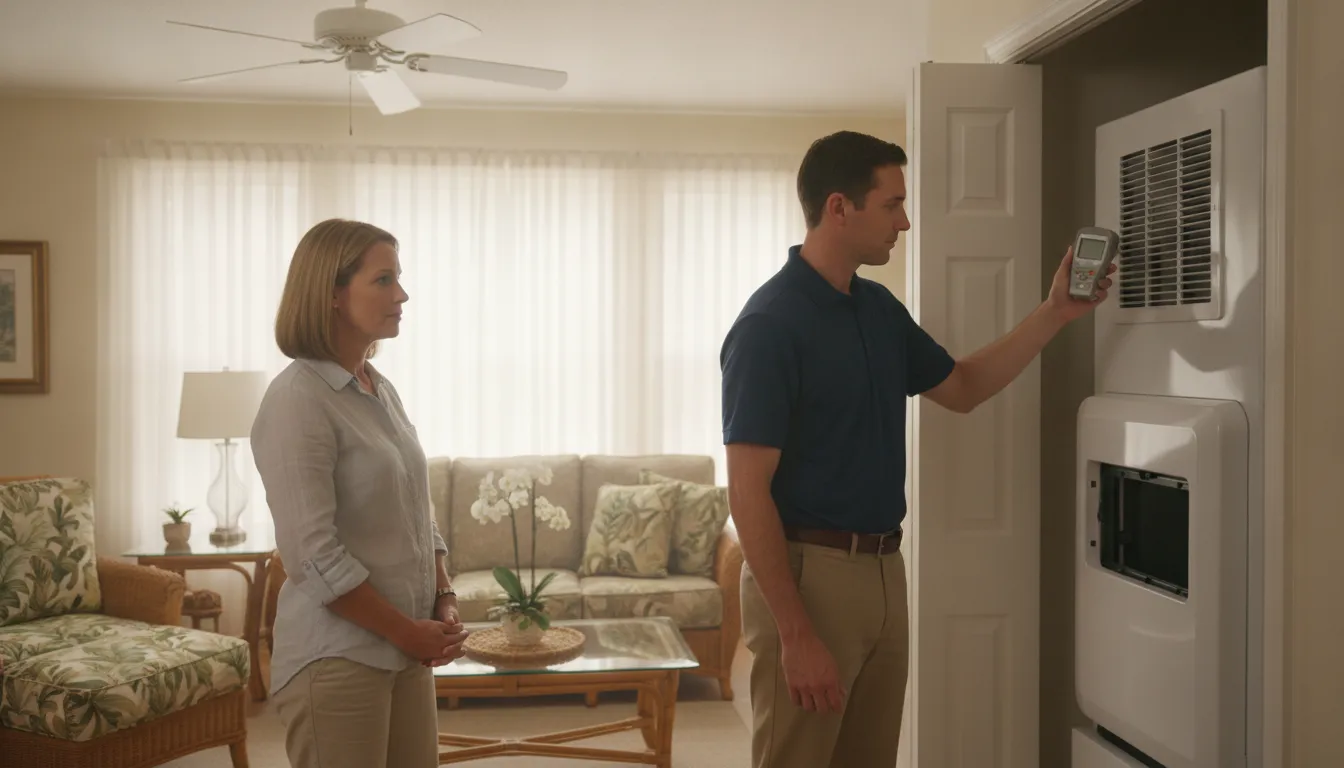
Indoor air quality testing helps when a Florida home stays musty, clammy, or uncomfortable after the simple checks are done. A test does not diagnose a person. It does not replace fixing a wet wall, a loaded filter, or an air conditioner that is not pulling moisture out of the air. It tells you whether the air, the humidity, or the equipment deserves a closer look.
Space Coast Cooling & Plumbing has served Cocoa and the rest of Brevard County since 1994. We repair and maintain heating and cooling systems, and we clean air ducts when dust and debris in the ventilation system are the problem. We do not sell indoor air quality testing, lab sampling, or a packaged air test. If the simple checks point to the air conditioner, a leak, or the ducts, ask us about HVAC, plumbing, or duct cleaning.
Ask Space Coast Cooling & Plumbing about HVAC, plumbing, or duct cleaning at (321) 631-5755
When does indoor air quality testing make sense?
Testing is worth it when the symptom keeps coming back and you cannot point to one obvious cause. One stuffy afternoon after cooking is not a reason to sample the whole house. A pattern is.
Look into indoor air quality testing when any of these keep showing up:
- A musty smell returns after cleaning, and you cannot find a wet cabinet, a slow drain, or a visible stain.
- Rooms stay clammy even though the thermostat is set where you usually keep it and the filter is clean.
- Dust builds up around returns soon after you clean, or one room feels stale while the rest of the house does not.
- Headaches, a scratchy throat, or fatigue ease when you leave the house and return when you come back. Those feelings have many causes. They are a reason to look, not a diagnosis.
- You just had a leak, a roof repair, or remodeling, and the odor or stuffiness did not clear after the materials dried.
Skip a broad test when you can already see the problem. Standing water, a soaked ceiling, or mold you can see means the moisture source comes first. The EPA's mold guide puts it plainly: control the moisture, dry wet materials within 24 to 48 hours, and clean what you can see. A lab number will not change that order.
If the house just feels damp in Florida weather and you want the everyday fixes, start with our Brevard County indoor air quality guide. That page covers comfort, filtration, and humidity habits. This one stays on the testing decision.
What can you check before you pay for a test?
A short walkthrough often tells you more than a mail-order kit. Do these checks before you schedule indoor air quality testing, and write down what you find. Bring that timeline to whoever you hire, or to an HVAC visit if the pattern points at the equipment.
Humidity in the rooms you actually use
Put an inexpensive humidity gauge in the bedroom and the room that feels worst. Read it in the afternoon and again at night for a few days. The EPA discusses a comfort range around 30 to 50 percent relative humidity and warns that indoor mold risk rises when humidity stays high. In a Space Coast summer, a reading that sits above 60 percent for days is a moisture problem, not a mystery pollutant.
If the gauge is high only while the air conditioner is short-cycling, or only in one closed room, say so. That pattern points to runtime, airflow, or a closed-off space more than to a whole-house chemical test.
The filter, the returns, and obvious water
Look at the filter. A filter packed with dust can make rooms dusty and can cut airflow. Look at return grilles. If furniture or a rug blocks them, the system cannot move air the way it was set up to. Then look for water: under sinks, around the air handler, on supply grilles, and on windows in the morning.
Water around the indoor unit is a homeowner symptom, not a part name. Note where you see it and whether it happens when the system runs. Our note on why an air conditioner leaks water walks through the safe checks. Fixing a drain or a leak is often the whole job. Testing the air before that leak is dry wastes the visit.
What a phone or a cheap monitor can and cannot tell you
A phone does not measure the air in your house. Some apps repeat an outdoor index from a nearby station. That number is not your living room. A basic indoor monitor can be useful if it shows humidity and a particle reading you can watch over days. Treat a single spike while you cook or vacuum as normal activity, not as a failed test.
Be careful with grow-it-yourself mold kits. Spores are already in outdoor air. A dish that grows something does not tell you whether indoor levels are higher than outdoors, and it does not tell you what to fix. If a monitor or a kit leaves you unsure, that is the moment to talk through indoor air quality testing with a person who can compare rooms, equipment, and moisture.
What does a professional visit actually measure?
There is no single indoor air quality testing package that fits every house. A useful visit starts with the complaint, then chooses measurements that can change the next step. A Cocoa home with a clammy guest room needs a different look than a Palm Bay home that smells musty after a supply-line leak. Some readings happen on site. A formal lab sample is a different kind of work, and this article does not treat it as something Space Coast Cooling & Plumbing sells.
Here is how the common checks differ:
| Check | What it looks at | Useful when | What it does not prove |
|---|---|---|---|
| Humidity and temperature. | How damp the rooms are while the system runs. | Clammy rooms, window condensation, or a musty odor. | It does not name a mold species. |
| Airflow and equipment review. | The filter, the returns, the air handler area, and whether rooms get air. | Dust returns fast, a room feels weak, or the system runs in short bursts. | It is not a lab report. |
| Moisture inspection. | Leaks, wet insulation, slow drains, and stains you can see. | Recent water damage, or a smell with no obvious source. | Hidden mold can still need a specialist. |
| Particle screening. | Dust and other airborne particles in the rooms you use. | Dusty returns, or symptoms that ease when you go outdoors. | It does not prescribe a filter brand. |
| Carbon monoxide check. | Whether a fuel-burning appliance is leaking CO into the home. | A furnace, a gas water heater, or an attached garage is part of the picture. | A low reading is not a medical clearance. |
Carbon monoxide is the one result you do not wait on. The EPA describes it as an odorless, colorless, toxic gas (EPA guidance on carbon monoxide). Sources include a leaking furnace, a gas water heater that back-drafts, a gas stove, and car exhaust from an attached garage. Fatigue, headache, dizziness, and flu-like symptoms that clear after you leave home are warning signs. If a detector alarms, or anyone feels sick, leave the house and call for help. Do not air out the room and go back to sleep.
For everyday dust and pollen questions, filter choice is a separate decision. Our Florida AC filter guide covers MERV ratings. A visit should not turn into a filter sales pitch before the humidity and the airflow are understood.
How should you read the results?
Ask what the number is being compared with. A mold or particle sample means little by itself. Outdoor air already carries spores. A useful indoor air quality testing visit compares the problem room with the rest of the house and, when sampling is used, with outdoor air collected the same day.
Use this order when you look at a report:
- Safety first. Any carbon monoxide reading that does not belong in the living space is an equipment and ventilation problem, not a discussion about purifiers.
- Moisture second. Humidity that stays high, wet insulation, or an active leak explains musty air better than a spore count.
- Airflow third. A blocked return, a filter that is overdue, or a system that barely runs will keep dust and dampness in the rooms you use.
- Gadgets last. A dehumidifier, a UV light, or duct cleaning is a follow-up when the readings show a job for that tool. It is not the default ending of every test.
There is no federal pass-or-fail number for indoor mold that we can hand you as a yes or no. If a report quotes a spore count without saying how it compares with outdoors, ask for that comparison before you pay for remediation. If the report mostly tells you to buy a device, ask which measurement the device is supposed to change.
Visible growth is different. If you can see mold on drywall or on the cabinet under a sink, cleaning and drying are the work. Sampling that spot to confirm what you can already see rarely changes the plan. Widespread growth, material you cannot safely clean, or mold in an HVAC cavity is a reason to stop the DIY cleanup and get the right licensed help.
When is the next step HVAC service instead of another test?
Indoor air quality testing is a decision tool. Once it points at the equipment or the water, another sample will not cool the house or dry the wall. These are the handoffs we see most often on the Space Coast.
The air conditioner is not controlling humidity
Florida systems remove moisture while they run. If rooms stay sticky, the system may be short on runtime, short on airflow, or simply not matched to the way the house is closed up. That is an HVAC visit, not a second lab panel. If the readings show the cooling system is doing its job and the house is still too damp, then a whole-home dehumidifier is the question to ask. We do not start there.
Dust is in the ducts, not in the air sample
A dusty supply after a renovation, or debris you can see at a register, can justify a look at the ductwork. Cost and scope belong on our air duct cleaning cost guide. Testing should not be repeated just to justify cleaning. Either the ducts need service or they do not.
You want a device before you know the source
UV lights and portable purifiers show up in a lot of Florida searches. They have narrow jobs. A UV lamp is not a leak repair, and a room purifier does not fix a house that stays above 60 percent humidity. If a closer look shows a biological concern inside the air handler, read our UV air purifier guide before you buy one. If the visit shows ordinary dust and humidity, go back to filtration, runtime, and moisture.
For the broader fix-it list after you know the cause, use our guide to improving indoor air quality in a Florida home. Ongoing checkups, rather than a one-time test every season, are what an HVAC maintenance visit is for. Our maintenance plan guide explains how those visits differ from a repair call.
Contact Space Coast Cooling & Plumbing about HVAC, plumbing, or duct cleaning: (321) 631-5755
Frequently asked questions
How can I test the air in my house myself?
Start with a humidity gauge in the worst room and a look at the filter, the returns, and any visible water. A basic monitor can show humidity and particles over several days. A phone app that quotes an outdoor index is not an indoor test. Skip grow-at-home mold kits. They do not compare your rooms with outdoor air.
Can poor indoor air make you dizzy?
It can. The EPA notes that higher carbon monoxide levels can cause headache, dizziness, confusion, and nausea, and that symptoms may ease after you leave the house. Damp air and dust bother some people too. Those clues are a reason to get out and get the home checked. They are not a diagnosis.
Does indoor air quality testing find mold?
A visit can find wet materials and, when sampling is actually needed, compare airborne particles with outdoor air. It does not need to "find" mold you can already see. The EPA's position is that moisture control is the key. Dry the source, then clean. Do not pay for a spore count that will not change that plan.
How much does indoor air quality testing cost?
There is no useful flat number, because the visit depends on the symptom. A humidity and equipment walkthrough is a different job from a carbon monoxide check at a furnace and gas water heater. Ask what will be measured and what decision the result will support before you book. If the cause is already a leaking air conditioner or a plumbing leak, repair comes before testing. Space Coast Cooling & Plumbing can help with that repair, or with duct cleaning when the ducts are the issue. We do not quote an air-test fee because we do not sell the test.
Who should I call in Brevard County?
Call Space Coast Cooling & Plumbing when the next step is the heating and cooling system, a plumbing leak, or air duct cleaning. We are based at 760 West Avenue in Cocoa and have worked on Space Coast homes since 1994. We serve Melbourne, Palm Bay, Merritt Island, Titusville, and the nearby beach communities. We can look at moisture, airflow, and the equipment. We do not perform indoor air quality testing.
If your home still feels wrong after the simple checks, start with the system that is already in the house. Contact us about HVAC service, plumbing, or duct cleaning.